Started with tin — a small camping burner and a steel ladle was enough. Then the obvious question came up: could we melt the aluminium cans now?
Aluminium needs higher temperatures than tin, and the gap matters:
| Metal | Melting point |
|---|---|
| Tin | 232°C |
| Zinc | 420°C |
| Aluminium | 660°C |
| Brass | ~900°C |
| Copper | 1085°C |
| Cast iron | ~1200°C |
| Steel | ~1370°C |
We looked at buying a small foundry online, decided it would be more fun to build one. My son and I built it.
The Build
Sand and gypsum cast inside a metal rubbish bin, steel mesh for reinforcement. Used an old fire extinguisher as the form for the central cavity. Added a pipe for the air inlet and a hair dryer to force air through — charcoal from the grill as fuel.
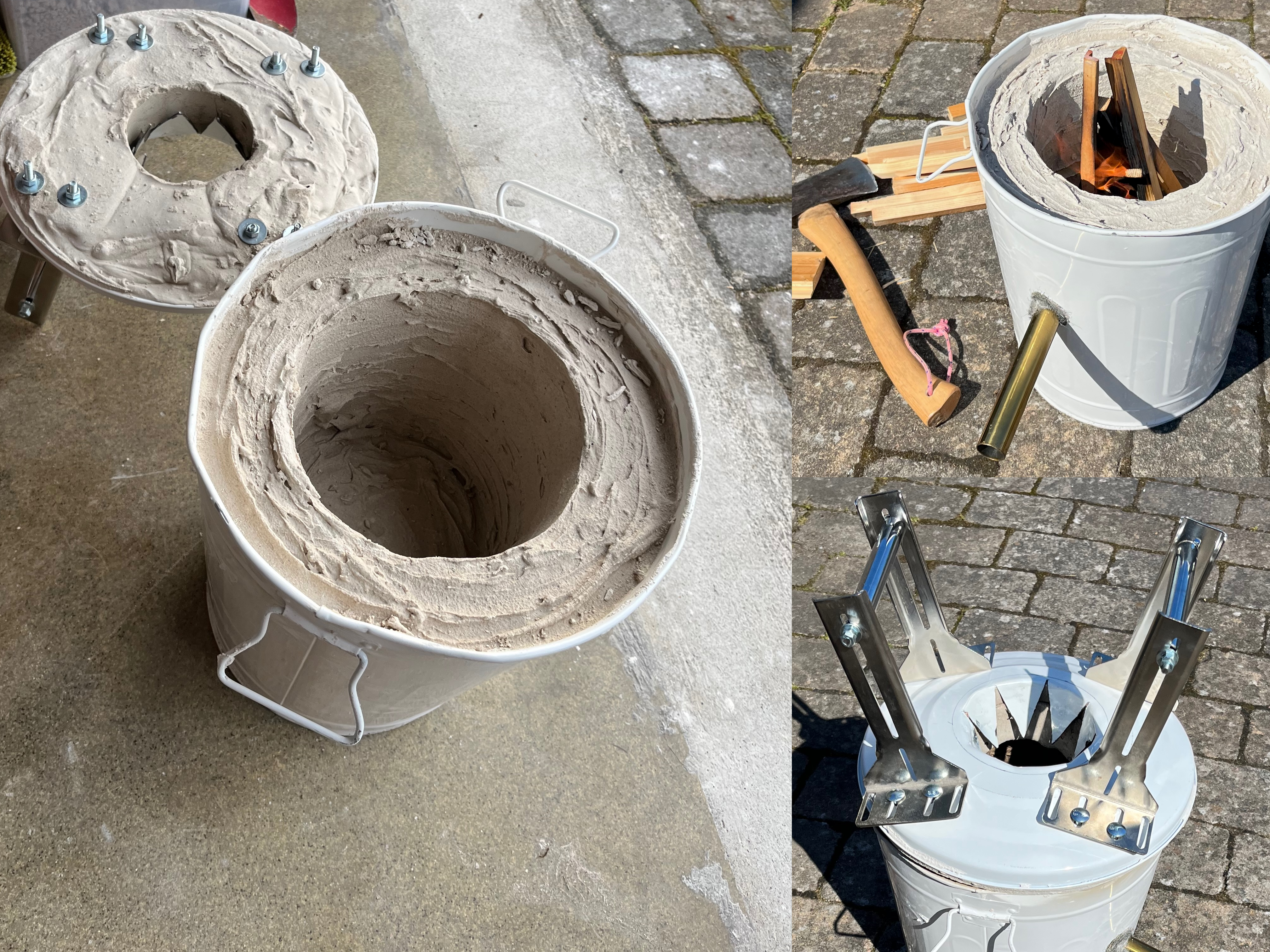
The foundry.
The hair dryer died on the first serious session. First upgrade: a proper fan from Biltema.
What We’ve Melted
Once the foundry was running we tried everything we could get hold of. Also picked up some wax for eventual lost-wax casting experiments.
| Material | Source |
|---|---|
| Tin | Second-hand shop finds |
| Aluminium | Cans + scrap |
| Brass | Scrap |
| Copper | Scrap |
| Wax | Candles |
Photos to follow.
We bought some tooling online — tongs, crucible, mould for casting bars.
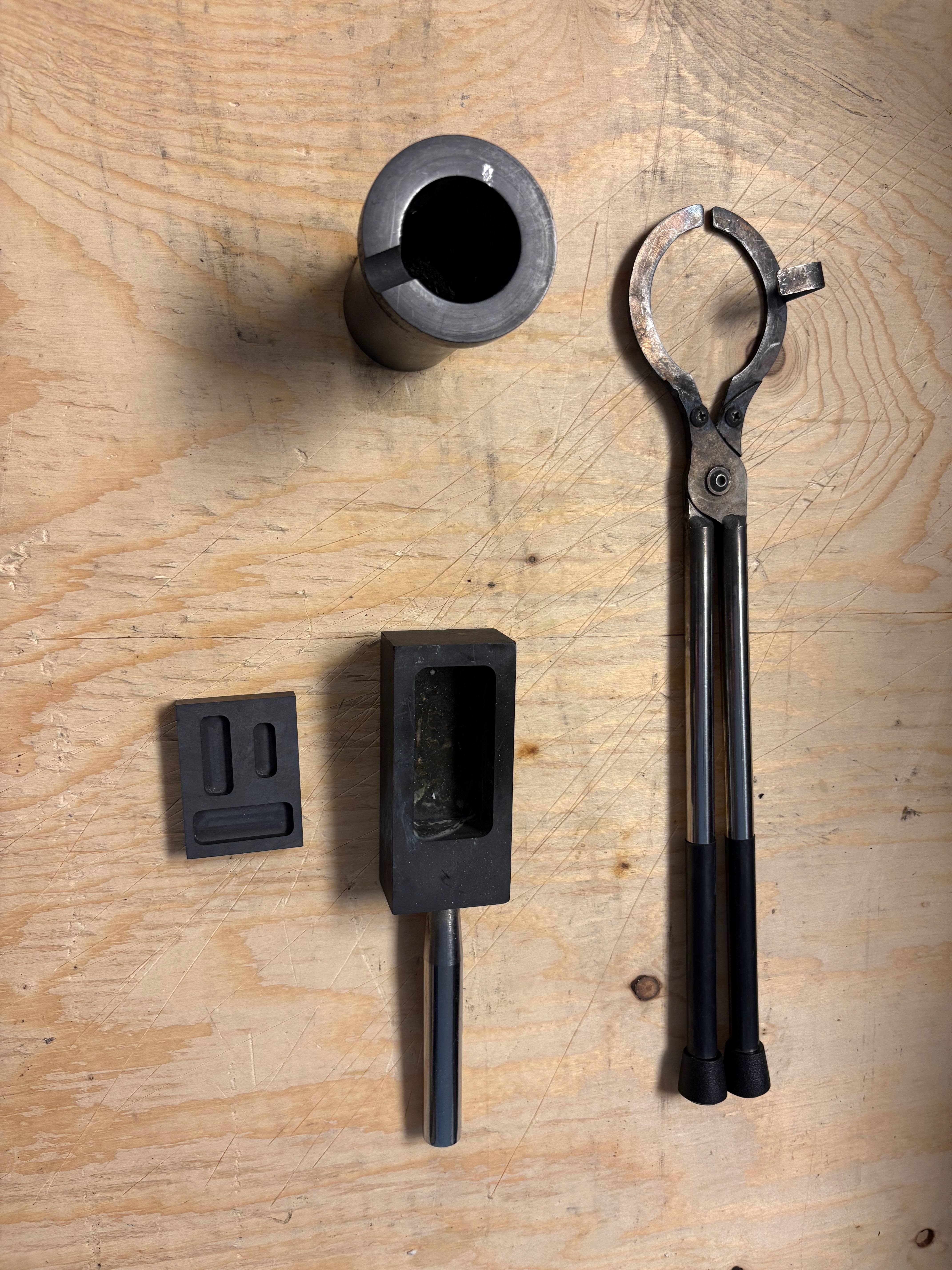
Tongs, crucible, and bar moulds.
And ofc safety kit on every session: heat-resistant gloves, safety glasses, face mask (steam explosions from moisture in moulds are real), fire extinguisher within reach, and distance from anything hot.
Stock — Bars Cast
Melted-down material poured into bar moulds for later use.
| Material | Stock |
|---|---|
| Tin | 1047g |
| Aluminium | 1398g |
| Brass | 200g |
| Copper | 2310g |
| Wax | 1730g |
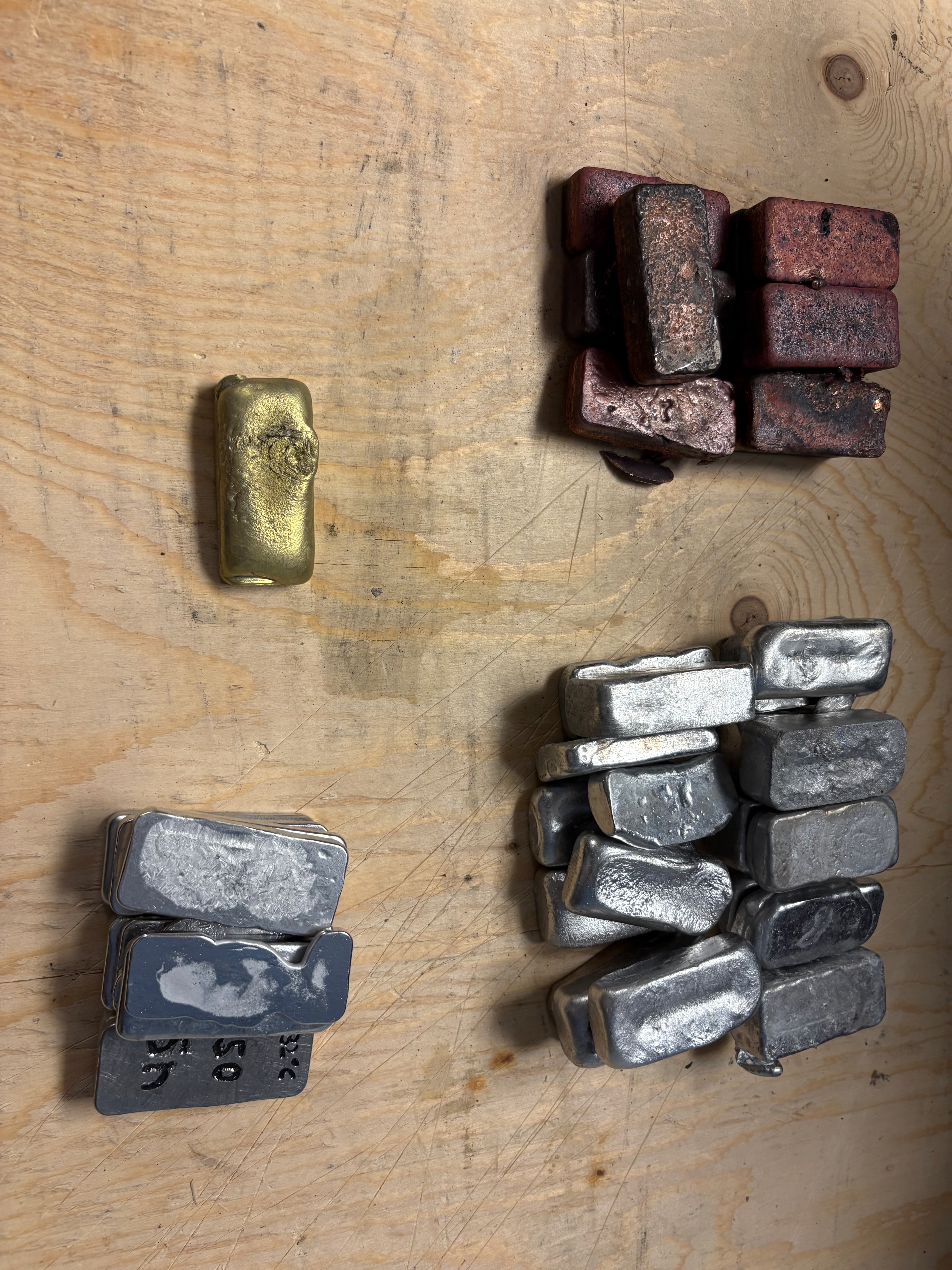
Cast bars ready for future use.
Moulding Methods
Different methods suit different metals, temperatures, and detail levels.
Silicon mould — works well for tin and other low-temperature metals. Quick to demould, picks up good detail. Proven success with the scout badges. Not suitable for aluminium temperatures.
Gypsum mould — tried with tin, not great. Must be completely bone-dry before the pour or moisture turns to steam instantly.
Green sand — mixture of sand and a binder that holds a mould impression. Tried making it from cat litter as the binder. Goes into a flask — we made one from wood. More experiments needed.
Red sand / oil sand — similar principle to green sand but oil-bound. Don’t have any yet.
Lost-wax casting — make a wax model, invest it in plaster, burn out the wax, pour metal into the void. Haven’t tried it yet. I have melted some candle stumps for the wax stock, will try and go from there.